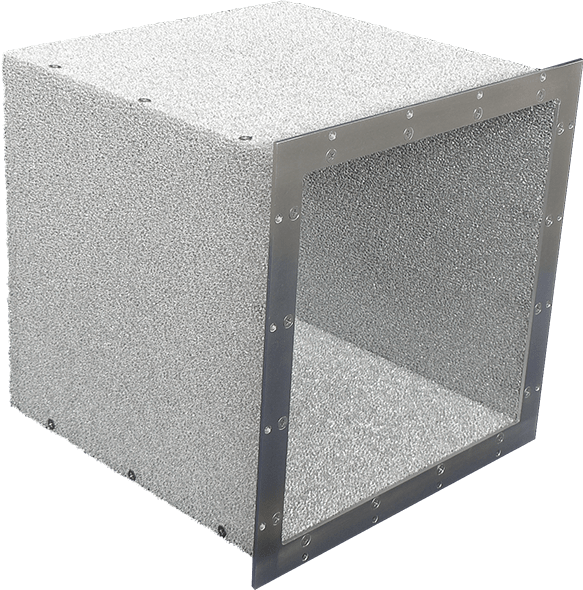
What is EMI Shielding?
EMI shielding is designed to protect sensitive electronic devices and communications equipment from Electromagnetic Interference (EMI) or Radio Frequency Interference (RFI).
Duocel aluminum foam is used for EMI (electromagnetic interference) shielding because it combines excellent shielding performance with significant advantages over traditional solid metal shields, especially in weight-sensitive applications like aerospace, defense, aviation, and electronics
Duocel provides robust, broadband EMI protection that’s lightweight, durable, thermally conductive, and structurally useful, all in one material!
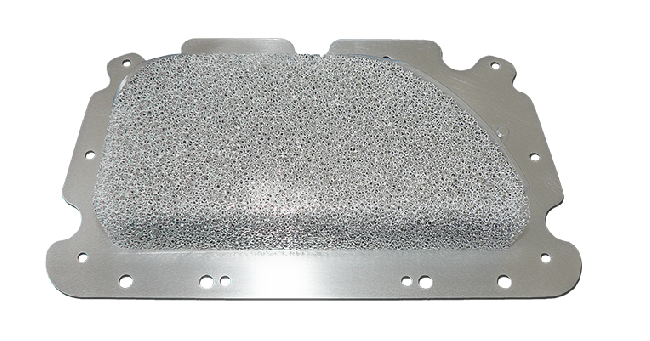
Protecting Your Electronics from Electromagnetic Interference
Foam provides EMI shielding for mission critical components on aircraft such as navigational and GPS systems. The tortuous nature of the material prevents the EMI interference from bombarding the equipment.
Electromagnetic interference (EMI) poses a significant challenge in modern electronic systems, affecting the performance of devices from telecommunications to aerospace.
Duocel® provides a highly effective, lightweight material for EMI shielding. The porosity of metal foam allows it to attenuate electromagnetic waves effectively by absorbing and scattering them, reducing the risk of interference.
Advantages of Metal Foam in EMI Shielding
- High shielding effectiveness as an effective Faraday cage – The electrically conductive aluminum ligaments create a network that reflects, scatters, and absorbs electromagnetic waves. The open-cell, tortuous (winding) path through the pores prevents direct line-of-sight penetration of EMI, while the small pore sizes (typically 0.6–2.5 mm) enhance this effect. Studies and demonstrations show shielding effectiveness exceeding 80 dB at lower radio frequencies (e.g., below 100 MHz) with just a 0.5-inch layer, and values around -44.6 dB in the X-band (8.2–12.4 GHz) even at low relative densities (~0.22).
- Multifunctional capabilities – Beyond EMI shielding, our foam offers:
- Good thermal conductivity for heat dissipation (helping cool shielded electronics).
- Structural/mechanical strength (can serve as a lightweight core or support).
- Permeability (allows airflow or infusion with other materials for added properties, like enhanced radiation shielding).
- Extremely lightweight – With relative densities between 4-15% (fully customizable if needed), our foams provide strong EMI protection at a fraction of the weight of solid aluminum or other metal sheets. This is critical for aircraft, spacecraft, satellites, and portable/mission-critical electronics where every gram matters.
- High surface area from porosity – The open-cell structure dramatically increases the internal surface area, boosting wave absorption, multiple internal reflections, and scattering of electromagnetic energy, which improves overall attenuation compared to flat solid conductors.
- Internally reflective nature – Electromagnetic waves bounce around inside the foam’s complex ligament network, dissipating energy through multiple reflections and eddy currents rather than passing through.
Applications of Metal Foam in EMI Shielding
Telecommunications: Metal foam is used in casings, base stations, and networking equipment to minimize signal interference.
Medical Devices: Sensitive medical equipment, such as MRI machines and diagnostic tools, benefit from metal foam shielding to prevent electromagnetic disruption.
Aerospace and Defense: Aircraft and military communication systems rely on lightweight and durable shielding materials, making metal foam an ideal choice.
Metal foam represents a breakthrough in EMI shielding technology, offering a unique combination of lightweight properties, high effectiveness, and efficiency. Its adaptability across various industries highlights its potential to replace traditional shielding methods. Metal foam plays a crucial role in advancing EMI shielding solutions, ensuring the reliability and functionality of electronic devices in an increasingly interconnected world.
Why choose ERG?
Traditional EMI shields (solid metal enclosures or gaskets) are heavier and can block airflow/heat transfer, while conductive fabrics or paints may lack durability or structural integrity. Duocel foam addresses these trade-offs, making it particularly valuable for protecting sensitive components like navigational systems, GPS, avionics, or other mission-critical electronics from external EMI (or preventing internal emissions).